







CBD oil has become a familiar part of many people’s daily routines, but not everyone enjoys taking CBD drops directly under the tongue. The natural, earthy flavour of whole plant CBD oil can take some getting used to, and you may be wondering whether there’s a more enjoyable way to incorporate it into your day.
The good news is that you can add CBD oil to food and drinks, from smoothies and yoghurt to chocolate, warm drinks and homemade snacks. With a little understanding of how CBD behaves when mixed with different ingredients, it’s easy to explore ways of using CBD oil that suit your preferences.
However, there are a few important things to consider before adding CBD to your favourite recipes. Temperature, fat content, serving size and the type of CBD product you use can all make a difference.
In this practical guide, we’ll explain how to use CBD oil in food, what happens when you add CBD oil to drinks, whether you can cook with CBD oil, and how ready-made products such as CBD chocolate and CBD gummies compare with traditional CBD drops.
Can You Put CBD Oil in Food?
Yes, CBD oil can be mixed into many everyday foods. In fact, incorporating CBD into a meal or snack is one of the simplest ways to avoid the distinctive flavour of taking the oil directly.
CBD, short for cannabidiol, is a naturally occurring compound found in the hemp plant. It is fat-soluble, which means it dissolves in fats and oils rather than water. This is why CBD extracts are commonly blended with carrier oils such as hemp seed oil or MCT oil.
When you add CBD oil to food containing some fat, such as yoghurt, avocado, nut butter or a salad dressing made with olive oil, it can blend more easily into the ingredients.
You don’t need to prepare anything complicated. A few drops can be stirred into a small portion of food, provided the amount of CBD is appropriate for you and the product is suitable for oral consumption.
It’s worth remembering that CBD oil taken with food is absorbed differently from CBD oil held under the tongue. When swallowed, CBD passes through the digestive system before entering the bloodstream. This generally means that absorption is slower and can be more variable.
Food, particularly a meal containing fat, can also influence how much CBD your body absorbs. For this reason, it’s sensible to be consistent about how you take CBD rather than frequently switching between taking it on an empty stomach and taking it with a substantial meal.
Can You Add CBD Oil to Drinks?
You can also add CBD oil to drinks, although the results depend on what you’re drinking.
Because CBD oil is not water-soluble, it doesn’t naturally dissolve into plain water, tea or coffee. Instead, ordinary oil-based CBD drops may float on the surface or form small droplets throughout the drink.
This doesn’t necessarily make the drink unsuitable, but it can mean the CBD isn’t distributed evenly. Stirring or blending can help temporarily, although the oil may separate again if the drink is left standing.
For a more enjoyable experience, creamy drinks, smoothies and drinking chocolate are often better choices than plain water.
Adding CBD Oil to Coffee
Coffee is one of the most popular drinks people consider combining with CBD oil.
If you enjoy a morning coffee, you can add an appropriate amount of CBD oil after preparing it. However, the oil may sit on the surface, particularly in black coffee.
Coffee containing milk or a plant-based alternative can be easier to mix, especially when blended rather than simply stirred.
It’s important to remember that CBD doesn’t cancel out the effects of caffeine. Coffee remains a caffeinated drink, and people who are sensitive to caffeine should take that into account when deciding what to drink.
If you’re adding CBD oil to coffee, it’s better to let the drink cool slightly rather than exposing the oil to unnecessarily high temperatures.
CBD Oil in Tea and Herbal Infusions
CBD oil can also be added to tea and herbal infusions.
As with coffee, ordinary CBD drops won’t fully dissolve in a water-based drink. Some people find that adding a little milk or a suitable plant-based alternative makes the experience more pleasant.
Herbal teas can be a particularly enjoyable option if you prefer a caffeine-free drink in the evening.
The key is to think of CBD oil as an ingredient you’re adding to your tea rather than something that will dissolve in the same way as sugar or honey.
CBD Oil in Smoothies
Smoothies are one of the easiest ways to incorporate CBD oil into a drink.
The thicker texture helps disperse the oil, while ingredients such as banana, berries, yoghurt, avocado and nut butter can complement or disguise its natural flavour.
For example, a smoothie made with banana, blueberries, oat milk and a spoonful of almond butter provides a simple base for adding CBD drops.
Blend the ingredients thoroughly and consume the smoothie reasonably soon after preparation.
If you’re new to adding CBD oil to food and drinks, a smoothie is a straightforward place to start because you can use ingredients you already enjoy.
Can You Cook with CBD Oil?
One of the most common questions we hear is whether it’s safe or practical to cook with CBD oil.
CBD oil can be incorporated into recipes, but it isn’t generally the best choice for high-temperature cooking.
CBD is sensitive to heat, light and oxygen. Prolonged exposure to high temperatures can cause cannabinoids to degrade, potentially changing the amount of CBD remaining in the finished food.
This is particularly relevant when frying, roasting or baking at high temperatures.
Rather than using CBD oil as a cooking oil, it’s usually more practical to add it after cooking, once the food has cooled sufficiently.
For example, you could prepare a bowl of porridge as normal and stir in CBD oil once it’s no longer piping hot. You could also add it to a finished soup, a salad dressing or a homemade dip.
This approach avoids unnecessary heat exposure and makes it easier to control the amount of CBD in an individual serving.
Can You Bake with CBD Oil?
CBD brownies, cookies and cakes are popular recipe ideas, but baking presents some additional challenges.
Oven temperatures are often much higher than the temperatures to which you’d ideally expose CBD oil. Although the centre of baked goods may remain cooler than the oven itself, the actual amount of CBD retained after baking can be difficult to predict.
If you want to make a CBD-inspired dessert at home, a no-bake recipe is often a more straightforward option.
Chocolate-based desserts, chilled energy bites and refrigerated puddings can all be prepared without exposing the CBD oil to prolonged high heat.
You can explore more inspiration in our collection of CBD recipes, which includes ideas for incorporating CBD into food and drinks.
Five Simple Ways to Add CBD Oil to Food
There are plenty of ways to experiment with CBD oil in your kitchen without needing specialist ingredients or complicated recipes.
1. CBD Yoghurt with Berries
A bowl of natural yoghurt topped with berries, seeds and a little honey makes a simple breakfast or snack.
If the CBD oil is suitable for oral use, you can mix an appropriate amount into the yoghurt before adding the toppings.
The creamy texture helps distribute the oil, while the fruit provides sweetness and flavour.
2. CBD Salad Dressing
Homemade salad dressings are another convenient option because they’re already oil-based.
You could combine olive oil, lemon juice, a little mustard and your favourite herbs, then add the CBD oil to an individual serving of the dressing.
Making a small portion rather than a large batch helps you keep track of exactly how much CBD you’re consuming.
3. CBD Overnight Oats
Overnight oats are ideal if you like preparing breakfast in advance.
Combine oats, milk or a plant-based alternative, yoghurt and your preferred fruit. Once the ingredients are mixed, you can incorporate the CBD oil into an individual portion.
Keep the oats refrigerated and follow normal food-storage guidance.
4. CBD Smoothie Bowl
A smoothie bowl combines the convenience of a smoothie with the texture of a dessert.
Blend frozen berries, banana and yoghurt until thick, then mix in your CBD oil and finish with toppings such as chopped nuts or granola.
Because the recipe doesn’t require heating, it’s a useful way to incorporate CBD without cooking it.
5. No-Bake CBD Chocolate Treats
If you enjoy chocolate, you can experiment with a simple no-bake mixture of cocoa, nut butter and other ingredients.
Allow any warmed ingredients to cool before adding CBD oil, and divide the mixture into clearly measured individual portions.
Remember that homemade CBD treats should be labelled and stored securely away from children and pets.
CBD Drinking Chocolate: A Convenient Alternative
If you enjoy a rich, comforting chocolate drink but don’t want to measure CBD drops into your mug, a ready-made CBD drinking chocolate may be a more convenient choice.
Our CBD Drinking Chocolate offers an alternative to preparing your own CBD-infused drink from separate ingredients.
Drinking chocolate can also appeal to people who dislike the natural taste of hemp oil.
As with any CBD product, it’s important to check the amount of CBD per recommended serving and follow the product instructions rather than assuming that every spoonful or cup contains the same amount across different brands.
When preparing a hot drink, follow the instructions provided with the product.
CBD Chocolate: A Different Way to Enjoy CBD
Chocolate is a natural partner for CBD because cocoa products contain fats and have a strong flavour that can complement hemp extracts.
Ready-made CBD chocolate can be particularly appealing if you prefer an edible product rather than taking oil from a pipette.
At Bristol CBD, we offer Extra Strong Organic CBD Chocolate for customers exploring CBD-infused chocolate.
Because this is a high-strength product, checking the labelled CBD content and serving information is especially important. The total amount of CBD in a chocolate bar should never be confused with the amount in an individual portion.
It’s also important to keep CBD chocolate clearly labelled and safely stored, particularly in households with children.
Chocolate containing CBD should be treated as a CBD-containing product, not as ordinary confectionery.
CBD Gummies and Jellies: Do You Need to Mix CBD into Food?
Not everyone wants to add CBD drops to a meal or prepare their own recipes.
For those who prefer a ready-made format, CBD gummies and jellies offer another way to consume CBD without the natural flavour of hemp oil.
Our Vegan CBD Gummies provide a convenient alternative to CBD oil, particularly for people who prefer a pre-portioned product.
The main practical advantage of gummies is that the amount of CBD per piece should be clearly stated on the packaging, making it easier to understand the serving size.
As with CBD oil mixed into food, gummies are swallowed and processed through the digestive system. Their effects and absorption can therefore differ from those of CBD drops held under the tongue.
Gummies and jellies should always be stored securely away from children, as their appearance can resemble ordinary sweets.
CBD Oil vs CBD Gummies vs CBD Chocolate: Which Is Better?
The best format depends largely on personal preference, the product’s CBD content and how you intend to use it.
CBD oil is flexible because it can be taken according to its instructions or added to suitable food and drinks. It also allows you to measure the amount using the product’s pipette, although drop size and CBD concentration vary.
CBD gummies offer convenience and a more familiar flavour, without the need to mix or measure oil yourself.
CBD chocolate is another enjoyable format, particularly for people who prefer chocolate-based products.
None of these formats is automatically better for everyone. The important considerations are product quality, accurate labelling, suitable serving sizes and responsible use.
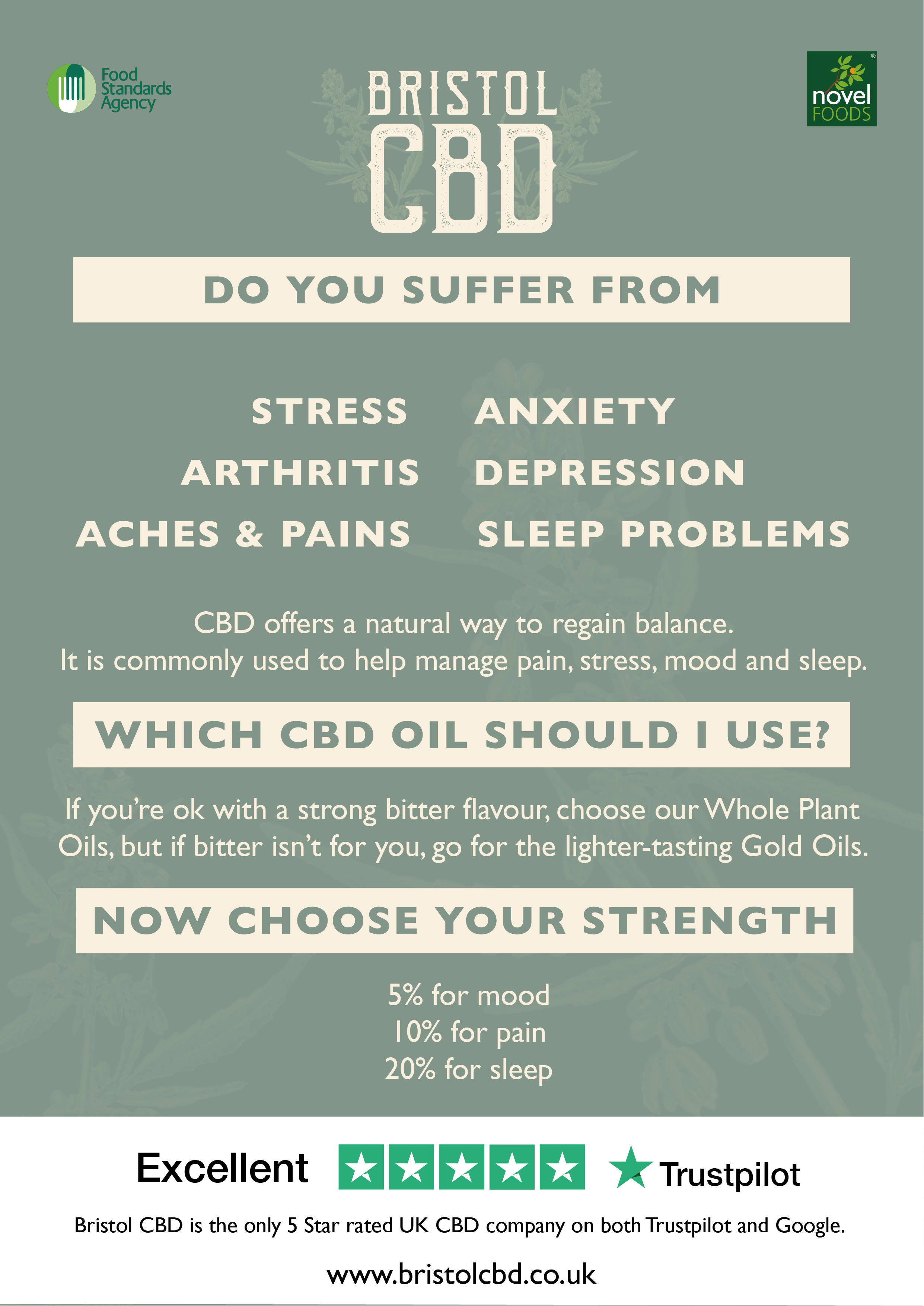
If you’re looking for a traditional CBD oil, our 5% Whole Plant CBD Oil is one option to explore. As with all CBD oils, check the label for the amount of CBD per serving before using it.
How Much CBD Oil Should You Add to Food or Drinks?
This is one of the most important questions to consider.
CBD oils are available in different strengths, so the same number of drops can contain very different amounts of CBD.
For example, a 5% CBD oil will generally contain less CBD per drop than a 10% or 20% oil of the same formulation and drop size.
This means that counting drops alone isn’t a reliable way to compare doses across different products.
You should always refer to the labelled CBD content, expressed in milligrams, and follow the relevant safety guidance.
The UK Food Standards Agency currently advises healthy adults to limit CBD from food supplements to 10mg per day as a precaution. The FSA also advises that CBD should not be consumed by children, people who are pregnant or breastfeeding, or people taking medication unless advised otherwise by a healthcare professional.
You can read the official guidance on the Food Standards Agency website.
It’s important to count CBD from every source during the day, including CBD oil, gummies, chocolate and drinks. Adding CBD to food doesn’t make it exempt from daily intake guidance.
If you take medication, have an underlying health condition or are unsure whether CBD is suitable for you, speak with your GP or pharmacist before using it.
Does Adding CBD Oil to Food Change How It Works?
Yes. The way CBD enters the body can influence how it is absorbed.
When CBD oil is swallowed with food or drink, it passes through the digestive system and is processed by the liver before reaching the wider circulation.
This is sometimes referred to as first-pass metabolism.
By contrast, when CBD oil is held under the tongue, some CBD may be absorbed through tissues in the mouth, although a proportion is still swallowed.
The amount absorbed can vary considerably between individuals and products.
Research also suggests that consuming CBD with a high-fat meal can substantially increase CBD exposure compared with taking it while fasting.
This doesn’t mean that adding CBD to a fatty meal is necessarily better. It means that food can change CBD absorption, making consistency and appropriate intake particularly important.
If you’re accustomed to taking CBD drops directly, don’t assume that mixing the same amount into food will produce an identical experience.
Does CBD Oil Affect the Taste of Food?
CBD oil can have a distinctive flavour, particularly when made with whole plant hemp extracts.
Depending on the formulation, it may taste earthy, grassy, nutty or slightly bitter.
Some people enjoy this natural flavour, while others prefer to disguise it.
Strongly flavoured ingredients such as cocoa, berries, cinnamon and nut butter can help balance the taste.
Creamy foods are often particularly suitable because they can incorporate the oil more easily than watery foods.
If taste is your main concern, a ready-made CBD product such as chocolate or gummies may be more convenient than experimenting with recipes.
Can You Add CBD Oil to Alcohol?
Although it’s possible to mix CBD oil into alcoholic drinks, we wouldn’t recommend combining CBD with alcohol.
Both substances can affect alertness, and combining them may increase unwanted effects such as drowsiness or impairment.
CBD can also interact with certain medicines, making additional caution important.
If you’re looking for an enjoyable CBD drink, a non-alcoholic smoothie, herbal infusion or drinking chocolate is a more sensible option.
How Should You Store CBD Oil and CBD-Infused Food?
Proper storage helps maintain product quality.
CBD oil should generally be kept tightly closed, away from direct sunlight and excessive heat, in accordance with the manufacturer’s instructions.
If you’ve mixed CBD oil into a perishable food, such as yoghurt or a smoothie, follow the normal refrigeration and storage requirements for that food.
It’s usually better to prepare individual servings rather than making large batches of CBD-infused food, particularly when accurate CBD distribution and portion sizes are important.
Always label homemade CBD-containing food clearly and store it out of reach of children and pets.
Frequently Asked Questions About CBD Oil in Food and Drinks
Can I put CBD oil in my morning coffee?
Yes, you can add CBD oil to coffee, although ordinary oil-based CBD drops won’t dissolve fully. Milk or a plant-based alternative may make mixing easier. Let the coffee cool slightly before adding the oil, and remember that CBD does not remove the effects of caffeine.
Can I add CBD drops to water?
You can, but standard CBD oil will generally float or separate because oil and water don’t mix naturally. A product specifically formulated to disperse in water may behave differently.
Can I cook with CBD oil in a frying pan?
We wouldn’t recommend using CBD oil for frying. High temperatures can affect cannabinoids, and CBD oil isn’t designed to replace everyday cooking oils. Adding it to food after cooking is usually more practical.
Can I add CBD oil to porridge?
Yes. Prepare your porridge as usual, allow it to cool to a comfortable eating temperature, and then stir in an appropriate amount of CBD oil.
Is CBD chocolate the same as CBD oil?
Both can contain cannabidiol, but they’re different product formats. CBD chocolate is eaten and digested, while CBD oil may be used according to its instructions or mixed into food. Always compare the labelled CBD content rather than assuming the products are equivalent.
Are CBD gummies easier to use than CBD drops?
Some people find gummies more convenient because they’re pre-portioned and don’t require a pipette. CBD oil offers greater flexibility for mixing with food and drinks. Both formats require attention to total CBD intake.
Does heating CBD oil make it stronger?
No. Heating CBD oil doesn’t make it stronger. Excessive heat can degrade cannabinoids and may reduce the amount of CBD remaining in a preparation.
Can I add CBD oil to food every day?
If CBD is suitable for you, it’s important to follow the product instructions and the current Food Standards Agency precautionary advice, including its 10mg daily limit for healthy adults. Speak to a healthcare professional if you take medication or have any concerns.
Final Thoughts: Making CBD Oil Part of Your Food and Drink Routine
Adding CBD oil to food and drinks can be a convenient way to use CBD, particularly if you don’t enjoy taking CBD drops directly.
From smoothies and yoghurt to salad dressings and chocolate-based treats, there are plenty of ways to incorporate CBD into familiar recipes without complicated preparation.
The most important things to remember are that CBD oil doesn’t naturally dissolve in water, excessive heat should be avoided, and taking CBD with food can change how it is absorbed.
Whether you prefer traditional CBD oil, CBD gummies, CBD chocolate or CBD drinking chocolate, choose a clearly labelled product, pay attention to the amount of CBD you’re consuming and follow current safety guidance.
For more ideas, visit our CBD recipes collection and explore ways to make CBD fit naturally into your everyday routine.
💚 About Bristol CBD
Bristol CBD is the most trusted CBD brand in the UK, with a 5 star rating on both Google and Trustpilot. Alongside our premium CBD products, we also offer a carefully curated range of high-spec functional mushrooms, including Lion’s Mane, Shiitake, Chaga and Reishi
At Bristol CBD we are committed to providing high quality, affordable CBD products together with friendly customer support. Bristol CBD is one of the few companies in the UK that has achieved full validation on the Food Standards Agency’s novel foods list for CBD products.
We pride ourselves on offering unparalleled customer service, support, and advice, backed by a 100% money-back guarantee if you’re not completely satisfied with your product.
If you have any questions about buying or using CBD or medicinal mushrooms, feel free to call us anytime on 07706 031 935. We’re always happy to share our experience and help you find the best solution for your personal needs.
Please note: our staff are not qualified doctors or nurses, and we do not make medical claims or recommend CBD for specific ailments. All content is based on scientific research and years of practical experience. We always encourage speaking with your GP or healthcare provider before starting any new supplement.