






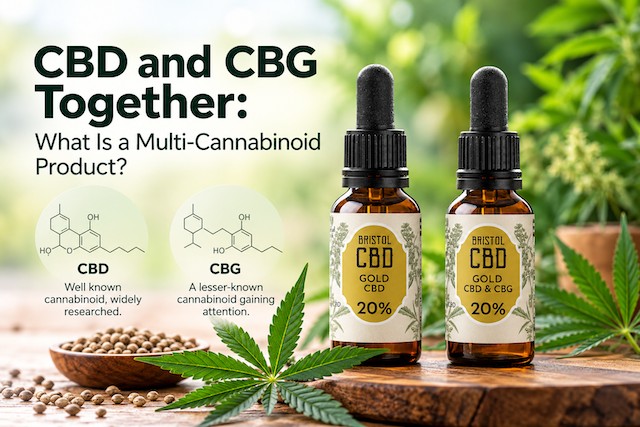
If you’ve been exploring natural hemp products, you’ve probably heard plenty about CBD. But there’s another cannabinoid that’s attracting increasing attention: CBG, or cannabigerol.
While CBD has become a familiar part of the UK’s wellness market, CBG is still relatively new to many people. As interest in cannabinoids grows, more people are discovering products that combine CBD and CBG rather than relying on just one hemp compound.
These are often called multi-cannabinoid products, and they’re becoming an interesting option for people who want to explore more of what the hemp plant naturally contains.
But what exactly does multi-cannabinoid mean? How do CBD and CBG differ? And what should you look for when choosing CBG oil in the UK?
In this guide, we’ll explain the differences between these two cannabinoids, explore why they’re sometimes combined, and help you understand the various types of CBD and CBG products available.
What Is CBG, and How Is It Different from CBD?
CBD, short for cannabidiol, and CBG, short for cannabigerol, are both naturally occurring compounds found in the cannabis plant.
They belong to a family of plant compounds known as cannabinoids. Scientists have identified more than 100 cannabinoids, although CBD and THC remain among the most extensively researched.
CBG is sometimes described as the mother of all cannabinoids. This nickname comes from the important role its acidic precursor, CBGA (cannabigerolic acid), plays during the development of the cannabis plant.
As hemp grows, CBGA can be converted by plant enzymes into the acidic precursors of other cannabinoids, including THCA and CBDA. These compounds can subsequently become THC and CBD through a process called decarboxylation.
Because much of the CBGA in a mature plant has already been converted into other compounds, CBG is often found in relatively small quantities in conventional hemp varieties.
This is one reason why producing concentrated CBG products can be more challenging and expensive than producing standard CBD extracts.
Although CBD and CBG come from the same plant, they have different chemical structures and interact with biological systems in different ways.
CBD has been studied extensively in comparison with many other cannabinoids. CBG research is still at a much earlier stage, with much of the available evidence coming from laboratory and animal studies.
Neither CBD nor CBG is considered intoxicating in the same way as THC. However, non-intoxicating does not automatically mean risk-free, and both compounds require appropriate consideration of safety, product quality and possible interactions with medicines.
If you’d like to explore CBG in more detail, read our dedicated guide to the benefits of CBG, including what researchers currently know about this lesser-known cannabinoid.
What Is a Multi-Cannabinoid Product?
A multi-cannabinoid product is a hemp extract or formulation that contains two or more cannabinoids.
Rather than supplying CBD alone, these products may combine CBD with CBG, CBC (cannabichromene), CBDV (cannabidivarin) or other naturally occurring hemp compounds.
Some formulations are created by blending individually extracted cannabinoids. Others are made using broader hemp extracts that naturally retain several cannabinoids from the original plant.
For example, a CBD and CBG oil might contain a deliberately selected ratio of cannabidiol to cannabigerol. A full spectrum hemp oil, meanwhile, may contain CBD alongside smaller amounts of CBG and other naturally occurring compounds.
The important distinction is that a multi-cannabinoid product contains more than one cannabinoid, but it does not necessarily qualify as full spectrum.
A product containing only isolated CBD and isolated CBG is still a multi-cannabinoid formulation, even though it may not contain the wider range of compounds found in a full spectrum extract.
Understanding this difference can help you compare products more accurately and avoid confusing marketing descriptions.
Why Are CBD and CBG Combined?
One of the main reasons manufacturers combine CBD and CBG is to create a formulation containing a broader range of hemp compounds.
Although the two cannabinoids share some similarities, researchers are investigating differences in how they interact with receptors, enzymes and signalling pathways throughout the body.
CBD has been studied for its interactions with several biological systems, including those associated with the body’s endocannabinoid system.
CBG is also being investigated for its activity at a variety of molecular targets. However, its effects in humans are not yet well established.
Combining CBD and CBG therefore creates a different chemical formulation from using either compound alone.
This is particularly interesting from a scientific perspective because cannabinoids may interact with biological systems in complex ways.
Key Research Findings on Combined CBD and CBG
- Neuroinflammation and Brain Health: Pre-clinical studies show that combining CBD and CBG significantly reduces nerve tissue inflammation (neuroinflammation) by lowering pro-inflammatory markers (like TNF-α and iNOS) and activating protective PPARγ pathways, showing promise for conditions like ALS and neurodegenerative disorders.
- Anxiety and Behavioral Profiles: Animal studies indicate that formulas rich in both CBD and CBG improve short-term spatial memory, social interaction, and anxiolytic (anti-anxiety) profiles compared to single compounds, with CBG modifying how CBD interacts with receptor pathways.
- Seizure and Anticonvulsant Activity: Research using the maximal electroshock seizure model demonstrated that a 1:1 CBD:CBG combination cut the effective dose (ED50) of CBD by over 50% (dropping from 133 mg/kg down to 60 mg/kg).
- Pain and Withdrawal Management: Combined CBD and CBG decrease naloxone-precipitated withdrawal behaviors synergistically in rodent models, though their interaction on mechanical sensitivity or acute pain can vary from sub-additive to synergistic depending on the exact dosing ratio.
- Anti-Tumor / Cell Apoptosis: Studies on glioblastoma cell lines indicate that pairing CBD with CBG effectively induces caspase-dependent cell apoptosis and inhibits tumor cell invasion.
For consumers, the value of a multi-cannabinoid product is primarily that it offers a different cannabinoid profile and allows them to explore a broader hemp formulation.
Understanding the Entourage Effect
When researching full spectrum CBD and CBG products, you’ll probably come across the term entourage effect.
The entourage effect is a theory suggesting that different compounds found in cannabis may influence one another’s biological activity when present together.
These compounds include cannabinoids, terpenes and certain other naturally occurring plant substances.
Terpenes are aromatic compounds responsible for many of the distinctive smells associated with plants, including hemp, lavender, rosemary and citrus fruits.
In hemp products, terpenes may be retained alongside cannabinoids depending on the extraction and manufacturing processes used.
The entourage effect proposes that these compounds may interact in ways that influence the overall properties of an extract.
It’s an interesting area of research and one of the reasons full spectrum products attract attention.
However, the entourage effect should not be treated as an established guarantee that a product containing more cannabinoids will work better.
At Bristol CBD, we believe understanding the natural complexity of the hemp plant is valuable. We also believe it’s important to be transparent about what science has established and what remains under investigation.
Full Spectrum CBD vs Full Spectrum CBG Oil: What’s the Difference?
The terms full spectrum CBD and full spectrum CBG oil can sound confusing, particularly if you’re relatively new to hemp products.
Both generally describe extracts that retain multiple naturally occurring compounds from the hemp plant.
The main difference is usually the cannabinoid emphasised in the formulation.
Full Spectrum CBD Oil
Full spectrum CBD oil is generally a hemp extract in which CBD is the principal cannabinoid.
Depending on the hemp variety and extraction method, the finished product may also contain smaller quantities of CBG, CBC and other cannabinoids, together with some naturally occurring terpenes.
Some full spectrum products may contain controlled amounts of THC, subject to applicable UK legal requirements.
The exact composition varies considerably between products, which is why independent laboratory testing is so important.
If you’re interested in exploring these formulations, you can browse our range of full spectrum CBD products.
Full Spectrum CBG Oil
Full spectrum CBG oil is generally a hemp extract or formulation designed to provide a substantial amount of CBG alongside other cannabinoids.
Some products contain CBG as their dominant cannabinoid, while others combine meaningful concentrations of both CBG and CBD.
The term full spectrum does not guarantee any particular ratio of cannabinoids, and it doesn’t tell you exactly how much CBG is present.
For this reason, checking the cannabinoid breakdown is more useful than relying on the product name alone.
When comparing full spectrum CBG oil, look for the actual milligrams of CBG, the amount of CBD, the total product volume and evidence of independent laboratory analysis.
Is Full Spectrum Always Better?
Not necessarily.
A full spectrum product provides a broader chemical profile, but that doesn’t automatically make it more suitable for everyone.
Some people may prefer an isolate product containing a single cannabinoid. Others may be interested in broad spectrum products that contain multiple cannabinoids but are formulated to remove THC to a specified testing limit.
The best choice depends on the product’s composition, safety information, quality and your individual circumstances.
CBG Oil UK: What Should You Look for Before Buying?
As interest in CBG UK products continues, consumers are encountering a growing variety of oils, pastes and concentrated formulations.
However, not all products are manufactured to the same standards.
A well-presented label or a high percentage of cannabinoids doesn’t necessarily tell you everything you need to know about quality.
One of the first things to consider is whether the manufacturer provides independent laboratory testing.
A certificate of analysis, commonly called a COA, should ideally confirm the concentrations of CBD, CBG and THC in the finished product.
It may also include testing for potential contaminants such as pesticides, heavy metals, residual solvents and microbial contamination.
This is particularly important with concentrated hemp extracts, where manufacturing quality and accurate cannabinoid measurements matter.
You should also look closely at how the product’s strength is described.
For example, a product labelled 20% CBG may be indicating the concentration of CBG, whereas another product labelled 20% cannabinoids might be describing the combined concentration of several different compounds.
These are not necessarily equivalent.
The volume of oil or weight of paste also matters. A percentage alone does not tell you the total quantity of cannabinoids in the container.
Finally, it’s worth choosing a supplier that offers clear product information, accessible customer support and straightforward guidance without making exaggerated health claims.
At Bristol CBD, our focus is on making high-quality hemp products easier to understand, with friendly support for customers who want help comparing different formulations.
Bristol CBD’s 20% Gold Full Spectrum CBD / CBG Oil

For people interested in exploring a CBG-focused formulation, Bristol CBD offers a 20% Gold Full Spectrum CBD (10%) / CBG (10%) Oil.
This product is an option worth investigating if you’re looking beyond conventional CBD oils and want to understand a different cannabinoid profile.
View 20% Gold Full Spectrum CBD / CBG Oil
When choosing a concentrated CBG oil, it’s particularly important to check the product’s current laboratory information and serving instructions.
The percentage in the product name is a useful starting point, but the complete cannabinoid profile provides a clearer picture of what you’re purchasing.
You may also want to compare the product’s cost per milligram of CBG rather than comparing bottle prices alone.
A concentrated formulation can appear more expensive initially, but the total cannabinoid content is often a more meaningful basis for comparing value.
It’s also important to remember that a higher concentration is not necessarily better or more appropriate for every individual.
CBD and CBG Paste: Another Way to Explore Multi-Cannabinoid Products
Oils are among the most familiar hemp products in the UK, but they aren’t the only format available.
CBD pastes are another option for people interested in concentrated cannabinoid formulations.
A paste typically has a thicker consistency than a conventional CBD oil and is often supplied in a syringe-style dispenser for measured administration.
Depending on the manufacturing process, hemp pastes may contain a range of cannabinoids and other plant compounds.
For customers exploring concentrated products, Bristol CBD offers a 23% CBD Paste in a 10g syringe.

23% CBD Paste – 2300mg CBD in 10g Syringe
This concentrated paste provides 2,300mg of CBD in a 10g syringe, according to the product description.
If you’re interested in CBD and CBG together, check the current laboratory breakdown to establish whether CBG is present and in what quantity.
It’s worth noting that a CBD paste is not automatically a CBD and CBG paste. The presence and quantity of CBG need to be confirmed through the product’s formulation and laboratory results.
This distinction is particularly useful when comparing concentrated pastes with oils specifically designed around CBG.
How Do CBD and CBG Interact With the Endocannabinoid System?
To understand why scientists are interested in cannabinoids, it helps to know a little about the endocannabinoid system.
The endocannabinoid system, or ECS, is a network of receptors, signalling molecules and enzymes found throughout the human body.
It is involved in regulating a range of normal physiological processes, including aspects of nervous system signalling, appetite, immune responses and other functions.
Two of the best-known receptors associated with this system are CB1 and CB2.
CB1 receptors are particularly abundant in the central nervous system, while CB2 receptors are associated with immune cells and various tissues throughout the body.
The body also produces its own cannabinoid-like signalling molecules, known as endocannabinoids.
These include anandamide and 2-arachidonoylglycerol, often shortened to 2-AG.
Plant-derived cannabinoids such as CBD and CBG can interact with some of the same biological pathways, although they do not necessarily behave like the body’s own endocannabinoids.
CBD has relatively low direct affinity for the main cannabinoid receptor binding sites and is known to influence several other molecular targets.
CBG has a different pharmacological profile and is being investigated for its interactions with cannabinoid receptors and other signalling systems.
These differences help explain why researchers are interested in studying CBD and CBG both individually and in combination.
However, understanding receptor activity in laboratory experiments is not the same as demonstrating a specific health benefit in people.
More well-designed human clinical studies are needed before reliable conclusions can be drawn about the effects of combining these cannabinoids.
Can You Take CBD and CBG Together?
CBD and CBG are already combined in some commercially available hemp products, and both may occur naturally in broader hemp extracts.
However, that doesn’t mean every combination or concentration has been established as safe for everyone.
Research into the safety of CBG in humans remains limited, particularly when it is taken regularly or alongside other cannabinoids.
CBD can also cause side effects and interact with certain medicines. These interactions can be especially important for medicines that are metabolised through specific liver enzyme pathways.
The UK Food Standards Agency advises healthy adults to limit CBD consumption from food products to 10mg per day as a precautionary measure, and it advises certain groups to avoid CBD.
This guidance should be considered carefully when looking at concentrated products, especially those that contain substantial quantities of CBD.
There is currently no equivalent broadly established UK consumer intake recommendation for CBG.
If you’re taking prescription medication, have an underlying medical condition or are unsure whether a cannabinoid product is appropriate, speak to your GP or pharmacist before using it.
Pregnant or breastfeeding people and those trying to conceive should avoid CBD products in line with FSA precautionary advice.
You should also avoid assuming that combining cannabinoids allows you to use higher quantities safely.
The available evidence simply isn’t sufficient to support that conclusion.
Are CBD and CBG Products Legal in the UK?
CBD and CBG are not automatically illegal simply because they are derived from hemp.
However, the legal status of a finished product depends on several factors, including its composition, THC content, intended use and the regulations governing its sale.
In the UK, THC and certain other cannabinoids are controlled substances. Products containing controlled cannabinoids must comply with the relevant legal requirements, and the rules are more complicated than a simple universal THC percentage limit.
CBD products marketed as foods or food supplements are also subject to the UK’s novel food framework.
For products sold in Great Britain, the Food Standards Agency maintains a public list of CBD products associated with novel food applications that have progressed through the relevant process.
How to Choose Between CBD Oil, CBG Oil and a CBD and CBG Combination
Choosing between different hemp products can feel complicated, especially when you see terms such as full spectrum, broad spectrum, isolate, gold oil and multi-cannabinoid extract.
The simplest place to start is by understanding what is actually inside the product.
A CBD-focused oil will generally contain cannabidiol as its principal cannabinoid.
A CBG-focused oil will contain a significant concentration of cannabigerol, although it may also include CBD and other cannabinoids.
A CBD and CBG combination may be formulated to provide meaningful quantities of both compounds.
A full spectrum product, meanwhile, is defined by its broader plant compound profile rather than by the presence of any single cannabinoid.
You should also consider the product format.
Oils can offer flexibility when following the manufacturer’s measured serving instructions, while pastes provide another format for concentrated formulations.
Personal preference, ease of use, ingredient information and cannabinoid content may all influence your decision.
Rather than assuming that one product is universally better, it’s more helpful to compare the complete formulation and choose a product that suits your preferences and circumstances.
And if you’re uncertain, there’s no need to work everything out on your own.
At Bristol CBD, we’re always happy to explain the differences between our products and help you understand what you’re buying.
Why Product Quality Matters With Multi-Cannabinoid Oils
When a product contains several cannabinoids, accurate manufacturing and testing become particularly important.
Different hemp varieties can produce very different cannabinoid profiles. Even products with similar names may contain substantially different concentrations of CBD, CBG and other compounds.
Extraction methods, processing temperatures, storage conditions and formulation techniques can also influence the finished product.
This is why independent laboratory analysis provides such valuable information.
A reputable supplier should be able to explain the concentration of the main cannabinoids, provide relevant testing information and identify ingredients clearly.
Transparency is especially important when a product is marketed as full spectrum.
Without a detailed cannabinoid profile, it’s difficult to know whether the product genuinely contains a broad selection of cannabinoids or simply a blend of one or two purified compounds.
At Bristol CBD, we believe customers deserve clear information, fair pricing and genuine support.
Our aim is to make high-quality hemp products accessible without expecting you to become an expert in cannabinoid chemistry before making a purchase.
The Future of CBG Products in the UK
The growing interest in CBG reflects a wider shift in how people understand the hemp plant.
For many years, CBD dominated discussions about non-intoxicating cannabinoids. Now, researchers and consumers are paying greater attention to compounds such as CBG, CBC and CBDV.
This doesn’t mean these lesser-known cannabinoids are automatically superior to CBD.
Instead, it highlights how much there is still to learn about the chemical complexity of hemp.
Future research may help clarify the safety, pharmacology and potential applications of different cannabinoid combinations.
More human clinical trials will be particularly important in determining whether combining CBD and CBG offers meaningful advantages over using individual cannabinoids.
For UK consumers, greater interest in CBG may also encourage improved product testing, clearer labelling and more detailed cannabinoid information.
These are positive developments for anyone who values transparency and informed choices.
Frequently Asked Questions About CBD and CBG
What is the difference between CBD and CBG?
CBD and CBG are two different naturally occurring cannabinoids found in hemp. They have distinct chemical structures and interact with biological systems in different ways. CBD has been researched more extensively, while scientific understanding of CBG remains at an earlier stage.
Is CBG stronger than CBD?
There is no reliable scientific basis for describing CBG as universally stronger than CBD. They are different compounds with different pharmacological properties, and their effects cannot be compared through a single measure of strength. A product’s concentration also doesn’t establish how effective it will be.
Does full spectrum CBD contain CBG?
Many full spectrum CBD extracts contain some CBG, but the quantity varies depending on the hemp variety and manufacturing process. Check the certificate of analysis to confirm whether CBG is present and how much the product contains.
Can CBD and CBG be used together?
CBD and CBG are combined in some hemp formulations. However, research into the safety and effects of these combinations in humans remains limited. Always follow appropriate safety guidance and consult a healthcare professional if you take medication or have any medical concerns.
Will CBD and CBG make you feel high?
CBD and CBG are generally considered non-intoxicating cannabinoids. However, some full spectrum hemp products may contain THC, which is intoxicating. The actual cannabinoid content of a product should always be checked through reliable laboratory testing.
What is the best CBG oil UK customers can buy?
There isn’t one universally best CBG oil. Look for transparent cannabinoid concentrations, independent laboratory testing, clear ingredient information, appropriate UK regulatory compliance and accessible customer support. The most suitable product will depend on your preferences and circumstances.
Is full spectrum CBG oil better than CBG isolate?
Full spectrum CBG oil contains a broader range of plant compounds, while CBG isolate contains purified CBG. Neither has been conclusively shown to be better for general wellness purposes. The choice depends on the formulation, your preferences and any need to avoid additional cannabinoids such as THC.
Are CBG products more expensive than CBD products?
CBG products can sometimes cost more because CBG is naturally present at relatively low concentrations in many mature hemp plants. However, prices vary depending on cultivation, extraction, concentration and product quality. Comparing the cost per milligram and reviewing laboratory information can help you assess value.
Discover CBD and CBG Products at Bristol CBD
CBD and CBG are two fascinating compounds from the hemp plant, and products that combine them offer an opportunity to explore a wider range of naturally occurring cannabinoids.
Whether you’re considering a full spectrum CBD oil, a concentrated CBG oil or a multi-cannabinoid paste, the most important thing is to understand the formulation and choose a product from a supplier you trust.
At Bristol CBD, we’re passionate about providing high-quality, affordable hemp products alongside the friendly, personal service our customers value.
If you’re curious about exploring CBG, take a look at our 20% Gold Full Spectrum CBG Oil, browse our full spectrum CBD products or learn more about the benefits of CBG.
And if you’re unsure where to start, we’re always here to help you understand the options and make an informed choice.
Further Reading and Scientific References
For independent information about CBD safety, UK regulations and the science behind combining cannabinoids, we recommend the following resources.
The Food Standards Agency’s consumer advice on CBD explains the UK’s precautionary intake guidance, including advice for people taking medication and other groups who should avoid CBD.
For a deeper understanding of the entourage effect, the scientific paper Does the “Entourage Effect” in Cannabinoids Exist? A Narrative Scoping Review examines the evidence behind interactions between cannabis compounds and highlights where further research is needed.
💚 About Bristol CBD
Bristol CBD is the most trusted CBD brand in the UK, with a 5 star rating on both Google and Trustpilot. Alongside our premium CBD products, we also offer a carefully curated range of high-spec functional mushrooms, including Lion’s Mane, Shiitake, Chaga and Reishi
At Bristol CBD we are committed to providing high quality, affordable CBD products together with friendly customer support. Bristol CBD is one of the few companies in the UK that has achieved full validation on the Food Standards Agency’s novel foods list for CBD products.
We pride ourselves on offering unparalleled customer service, support, and advice, backed by a 100% money-back guarantee if you’re not completely satisfied with your product.
If you have any questions about buying or using CBD or medicinal mushrooms, feel free to call us anytime on 07706 031 935. We’re always happy to share our experience and help you find the best solution for your personal needs.
Please note: our staff are not qualified doctors or nurses, and we do not make medical claims or recommend CBD for specific ailments. All content is based on scientific research and years of practical experience. We always encourage speaking with your GP or healthcare provider before starting any new supplement.